Broad, but Dangerous: The Rise of The Renaissance Engineer
Rome, 1490. Marble dust, art, engineers, science.
The Renaissance period reshaped the world, and it did it first and foremost through the technology of its time.
Leonardo da Vinci, the inventor, painter, and engineer, became the archetype we now call the Renaissance man: someone who embodied the Latin ideal of humanitas, a well-rounded excellence in education, physicality, and civic duty.
Over the last four years we are witnessing a definite shift to a new world: the age of AI.
Every great movement rode on a technology: the printing press democratized knowledge, the steam engine redrew human geography, and the transistor built computers and the internet.
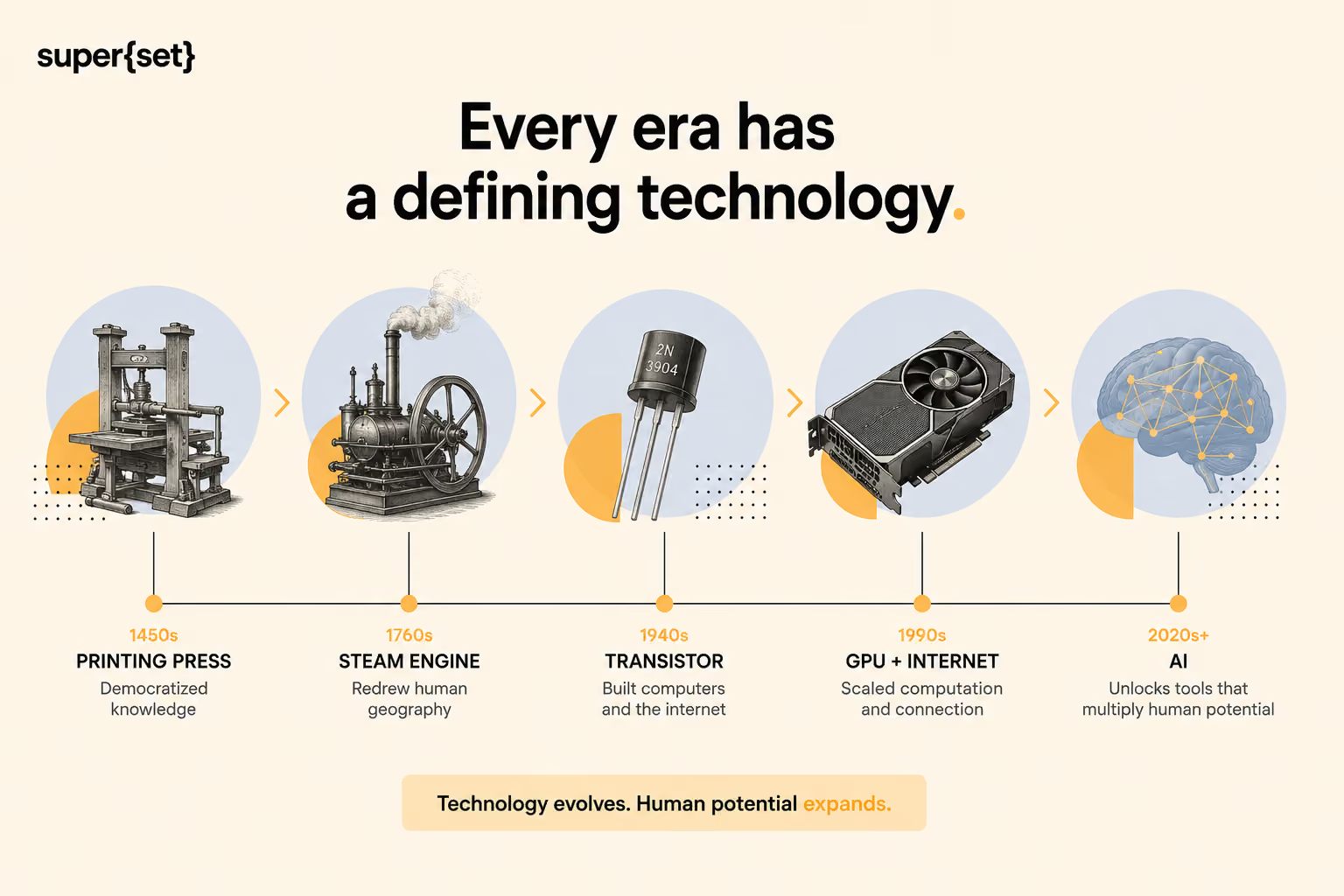
Now, AI unlocks tools that handle our tasks, multiply our output, and put creativity into motion. This is a new renaissance. We've written about this before: Task-Absorbing Software.
The Renaissance era required a Renaissance style human. The age of AI requires a Renaissance Engineer. Let’s dive into what that looks like.
Broad, but Dangerous
At the recent super{set} x Founders Bay event, Mochamad Asri, a leading architect at NVIDIA, described the only kind of engineer he cares about hiring: someone "broad enough to understand a wide range of problems, but dangerous enough to deep dive into a particular topic." The old advice was to stay in your lane. Mocha (his preferred nickname) was blunt; that doesn't cut it anymore.
Kimber Robbins, VP of Product and Engineering at the compliance platform Ketch, sat beside him and went further: "Engineers are now product managers." She's stopped hiring PMs entirely. That's not because the job isn't important anymore, it's because it's grown too important to put in a box.
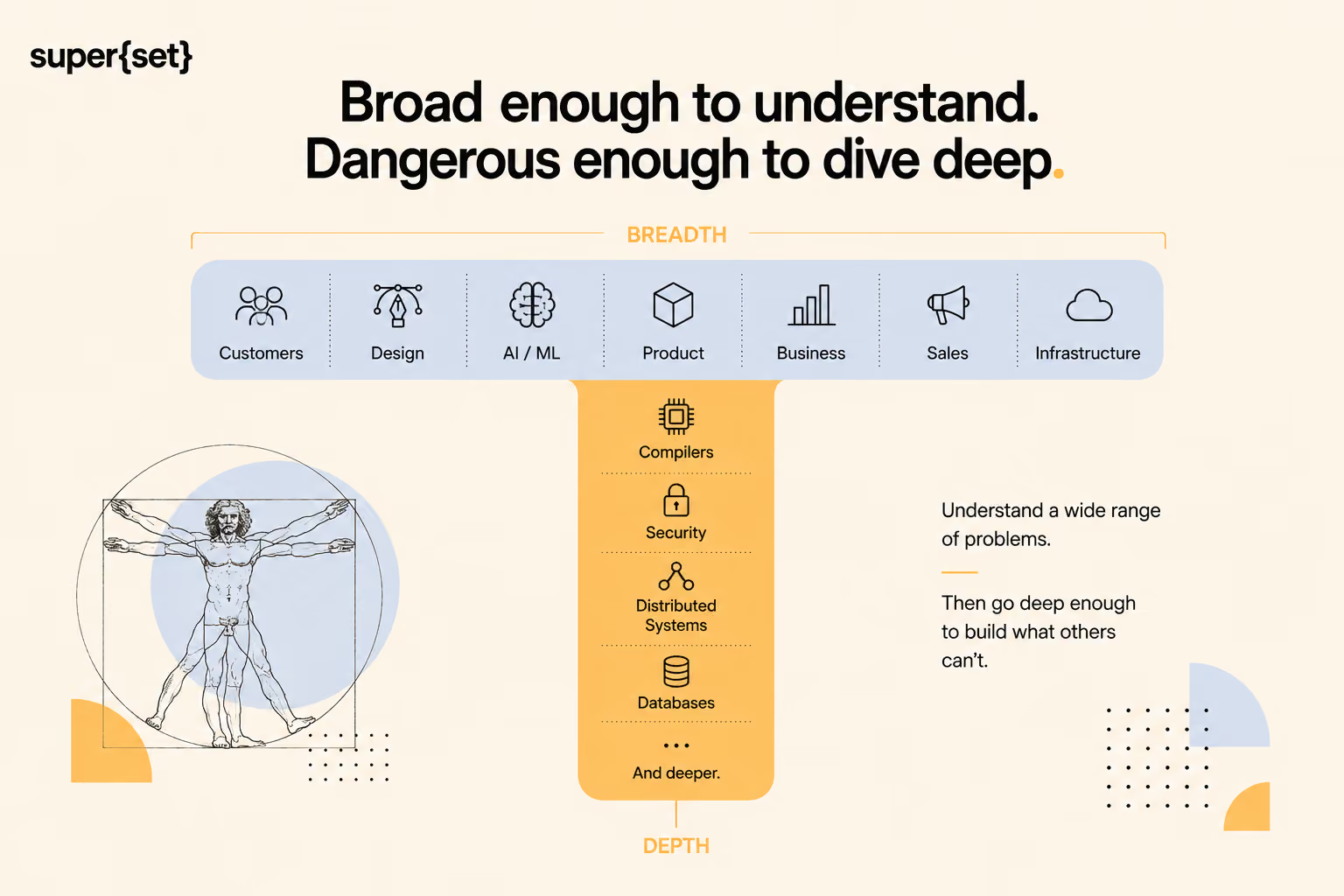
Engineers today are simply asked to do more: cover domains they've never touched, understand customers, find their pains, and build the solutions themselves. A 10x engineer no longer means someone who codes 10x faster; it means someone whose output (i.e. product features) gets adopted 10x more. Vivek Vaidya, CTO and founding partner of super{set}, put it plainly: in the AI age, coding excellence is measured by features shipped that customers love.
Unlocking all of this is that the tools finally match the task. AI now writes 75% of Google's new code, and the gap between an idea and shipped code has dramatically shrunk.
Which means execution is no longer the limiting factor. Understanding what to build is.
Love Is the New Bottleneck
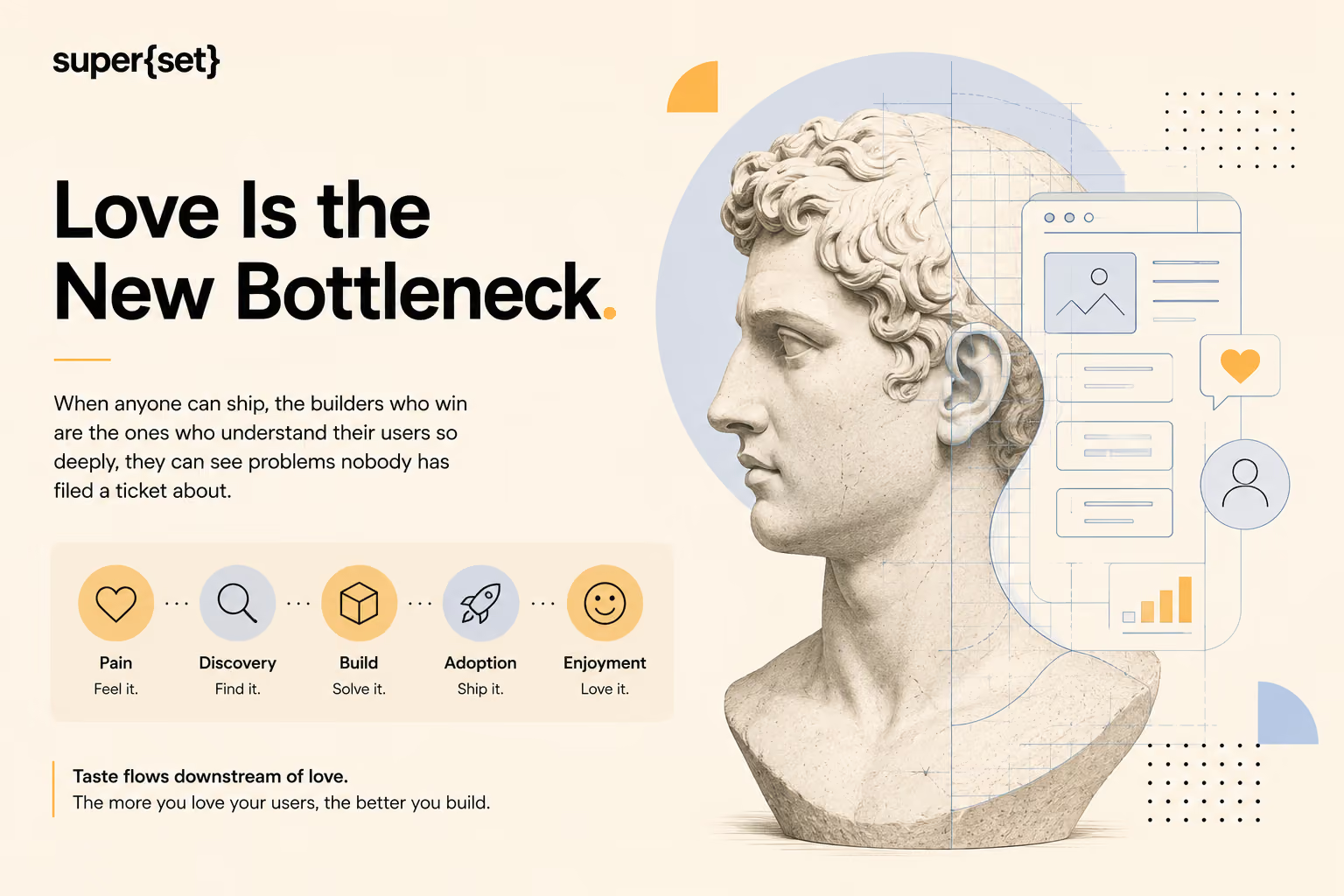
Here's my central claim: what defines the Renaissance Engineer isn't their ability to write code, it's their dedication and passion for the customer and the end result, in other words “are they fully in love with solving the problem”.
When anyone can ship, the builders who win are the ones who understand the people they're building for so deeply that they can see problems nobody has filed a ticket about. You find those problems by living where your customer lives, feeling what they feel every day, and caring enough to fix it.
Taste flows downstream of that passion and dedication. Kimber will tell you that knowing how to build in Figma is becoming obsolete; what defines a good designer now is taste. Mocha agreed from a field far from UI/UX: even chip design is a mix of science and art, and you can't get design taste from AI. It comes from someone who's done the work, seen many products, and can call a layout clean, modular, even beautiful. He stares at chips for two hours at a time.
This is the new humanitas. Renaissance Engineers love and become their user, taking a feature from pain, to launch, to adoption, to enjoyment and loyalty. And when a product is loved, users don’t just stick around, but refer it to their friends.
Blitzing Domain Expertise
So how do you build that love and passion, that domain expertise? The best answer I've heard came from a closed super{set} Hive session with Kian Alavi, CEO of the nonprofit fintech startup Mazlo: "Everyone has a local maxima to their abilities, a point where you can't get much better. You can raise that local maxima through experience, passion, and creativity. And if you don't have the experience, you have to overcompensate with extreme passion and creativity."
This struck me the most, and I’m confident it will resonate with many people early in their careers. You won't out-experience a 20-year veteran. You can out-passion them, out-create them, and blitz domain expertise faster than anyone expects.
Finally, don’t be afraid to surround yourself with existing domain experts; the lessons they teach you will raise your local maxima and that of your business. Kian commented on specialists and the role they play in startups: after handling growth purely founder based for a year, he realized his own local maxima was met, and hired an expert with years of experience in sales. She systemized their sales, taking it from 1 to 100. Way faster and more efficiently than Kian could have done.
Generalists love deeply, move quickly, and build with passion - but they can only do that with the right supporting sources of expertise. Don’t limit yourself on experts; grow through them.
Key Takeaways (TLDR)
The printing press democratized knowledge and produced the Renaissance man. AI has democratized building, and it will produce the Renaissance Engineer: broad but dangerous, defined by how deeply they love who they build for.
Technical skill is no longer the limiting factor; understanding your customer is. Taste is a skill you can grow and expand, and you know you’ve succeeded from features pushed and adopted, not by the number of lines of code you write.
Finally, If you're short on experience, overcompensate with passion and creativity and surround yourself with others who know what you lack.
Rayyan's Thoughts
I asked Kian: how does someone build domain experience, and how do they know what to learn? He answered: "There's going to come a time when there's a stack of books about something next to your bed. If you look at that stack and think, I'm so excited to learn this, you're on the right path. If it feels like an annoying task, you're in the wrong area."
When you fall deeply in love with a problem, and you stay curious enough to research it and talk to experts about it, the only gap left between idea and execution is your own willpower. The models are already good enough. You can build and publish, today, end to end.
I choose love as the term I use to describe this very purposefully. At its core, product development is a romance; finding the problem that makes your heart race, carefully noticing the minutia of user pain, and making your users fall head-over-heels for your solution.
Building software people love is romantic, and it’ll take Renaissance Engineers to get there.
Tech, startups & the big picture
Subscribe for sharp takes on innovation, markets, and the forces shaping our future.
Let's keep in touch
We're heads down building & growing. Learn what's new and our latest updates.